


“The Earth was below me, and the sky was above me. The sky was dead.”
-Joseph A. Walker, 1960, after X-15 Flight 34
November 1, 1959
Milestones were happening left and right, most by the USSR, if the United States didn’t catch up soon, they’d be left in the dust. The still relatively new NASA put out a request to several companies, asking for spacecraft design that could be implemented as soon as possible. A multitude of incredible designs were provided by companies all over the country. Goodyear submitted a 7ft wide sphere covered in ablative material, planned to be in orbit for 5 days at a time, though with a miserable landing precision of 1300 km. McDonnell submitted a blunt body with a curved top, orbiting just a single time before landing - Worse than Goodyear, but McDonnell’s design was more realistic, and had twice as good landing precision. Convair provided a similar design to Goodyear, though much more cramped, only 5ft wide. There were a few strong contenders, namely North American, Northrop and Bell labs, Martin, and the aforementioned McDonnell.
North American provided X-15B, a slightly modified X-15 launched on a Navaho missile, both components having already been tested, this seemed appealing, if not for the fact that it was limited to suborbital flights. Northrop and Bell had given the design of Dynasoar, a design actually much older than this request. It is a unique spaceplane designed to launch on a Titan, holding one astronaut, and performing a hypersonic glide after re-entry, quite similar to the X-15 and X-15B. The final proposer, Martin, had the Fletcher spaceplane. Somewhat of a compromise between the X-15B and Dynasoar, a longer spaceplane, capable of seating 2 people for a week, or one person for 3 weeks. It could also carry either a docking port, or a small cargo bay, with the latter being exclusive to the one person version. When asked for what launch vehicle it would be launched on, the preliminary study for Arcturus was shown, a very interesting proposition. Ultimately, NASA chose McDonnel to build the spacecraft, but went with an entirely new spacecraft design. A blunt body conic capsule called Mercury.
This was a rather disappointing conclusion for Martin, but it wouldn’t be for long. To facilitate the launch of NOTSNIC, a Navy rocket, on an X-15, a strange mix of a USAF and NASA craft, a new program was created; one where the Navy, Army and USAF would all pitch in to continue the safety of the nation, and the world, from a new vantage point. The American Military Space Association - AMSA. One new X-15 was built, with another still in production. These would be specifically for AMSA, sporting a brand new attachment system and minor changes to make it perform better under structural loads. A new ejection seat was developed as well; launching a solid rocket from under the plane could potentially be risky, so a safe ejection seat would be required. This would need to survive a Mach 4 ejection, 4.5 for safety margin, and be pressurised for an altitude of 80 kilometres, essentially space. This was done by having a specially crafted “clamshell” above the seat, if abort was needed, it would close down and shoot out of the vehicle. It was likely that at some point the pilot could pass out, most likely from deceleration, so parachute deployment (drogue and main) would be automatic. In a risky decision, the ejection seat was not yet ready for flight, but the mission would proceed regardless. The first mission would only be a test flight, and the next two would only carry dummy payloads with no risk of explosion - hopefully not requiring an abort. The seat should hopefully be ready in time for the first operational flight, scheduled for April 18, 1960.
November 13, 1959 - Edwards AFB, California
That first AMSA X-15 flight would serve not only as a test of the X-15 itself, but for the management and cooperation of the agency. William Bridgeman tightened the seal of his pressure suit as one of the flight preparation crew came up to him, two people standing beside him. James Douglas Jr, Secretary of the Air Force, and Wilber M. Brucker, former Secretary of the Army, now the head of AMSA. the Secretary of the Air force, Army, and Navy all jointly run the program, with one of the three being the head, in this case, Wilber. This was to make sure no one branch had control over the total agency, while still having a leader. The secretary of the navy was unable to make it, but sent his regards nonetheless. Brucker and Douglas wished Bridgeman good luck, closing the canopy together. The cabin was pressurised and the B-52 took off from the runway, quickly climbing into the sky. William gazed out the window and reported on internal systems, mentally preparing for the rush of activity moments away from happening. For this test flight, an apogee of 30 kilometres was planned, higher than any X-15 had flown before, and at a speed of around Mach 2. Not unrealistic, the fastest X-15 flight was around Mach 1.85, so not too large of a leap in velocity.
Crossfield “Ready for separation, pressure is stable and everything is reading alright.”
Brucker “We hear you, Will, Go for separation. Godspeed.”
The X-15 gently falls away from the mothership for a few moments, Crossfield’s brain in overdrive, he ignites the new LR99 engine, quickly burning through the tanks of LOX and ammonia. It’s a beast to keep stable, moving at speeds rapidly approaching supersonic, the vehicle could roll and tumble at any moment, should the wrong inputs be provided. Breaking past Mach 1, rising higher and higher, 20 kilometres, Mach 1.8, the brilliant blue sky giving way to a cold black abyss. The engine continues to burn, breaking Mach 2.2 before finally shuttering. The rocket plane continues to coast, reaching a maximum height of 34 kilometres before beginning to descend. Carefully, Crossfield starts to turn the vehicle, keeping steady. The stressful descent comes to an end as the bottom fin is jettisoned shortly before touchdown. The wheels make contact with the runway, sparks flying up as it breaks as fast as it can, nearly rolling off and onto the desert ground, halting just before. Crew rush to the plane to safe the vehicle and help Crossfield disembark, opening the canopy and being treated to a post-flight lunch.
April 15, 1960 - Kazakh SSR
The USSR continues its conquest of the moon with yet another Mechta probe, this time, a small solid motor onboard would attempt to slow it down into orbit of the moon. Launching in the evening, it becomes apparent instantly that something is wrong, the rocket begins twisting as it rises for seemingly no reason. Then it’s spotted, one of the fins was installed improperly, causing it to tilt and induce a slow but increasing spin. It begins to speed up until the fin entirely falls off, slightly unbalancing the mass and causing the entire vehicle to spin out of control and break apart.
April 16, 1960
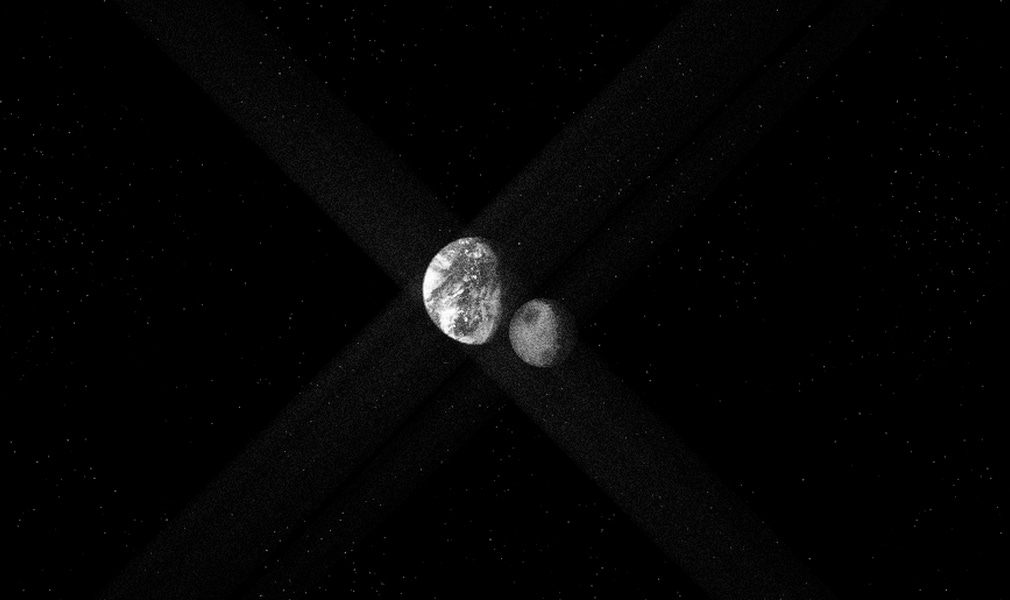
This failure was quite hurtful, but thankfully, two probes were made, and the second one was launching the next day. The launch goes off without a hitch, the trans-lunar injection working well, and the probe peacefully travels through cislunar space, arriving on the 19th of April, just 3 days later. It approaches the moon and prepares for an attempt at orbital insertion. The solid motor ignites and begins to push the feeble spacecraft incredibly fast, burning for barely any time at all; it manages to impart a velocity change of 3 kilometres/s, cancelling out enough of the speed to enter lunar orbit. Had it not been pointing the wrong direction. Due to an engineering error, the spacecraft’s attitude had been almost a full 180 degrees in the wrong direction1, boosting its lunar-relative speed up to around 6.5km/s, more than enough to escape. As if that wasn’t bad enough for the lunar orbiter, the moon at intercept was at the perfect point for this burn to send it out of the Earth’s sphere of influence, and send it in towards the sun. Mechta-5 had accidentally entered an orbit bringing it the 0.68AU, closer in than Venus. The best they could hope for from this mission is some heliocentric science, and a single image of the Earth and Moon together, the last time this probe would see the earth for years.
NASA Press Release - May 3, 1960
On the day of May 1, pilot Francis Gary Powers’ meteorology plane went missing North of Turkey2. Prior to loss of contact, Powers had reported over emergency frequencies that he was having issues with his oxygen supply. Shortly after, it is believed that his plane continued on with autopilot as he was unconscious - potentially crashing in Lake Van, Turkey . The fate of Powers is unknown; we are doing everything in our abilities to locate him. More information should follow shortly.
Soviet Publication - Midday May 5, 1960
On the 1st of May, an American spy plane was shot down over the C.C.C.P., it refused to respond to any compliance requests, or any transmissions. Any further airspace incursions will be met with deterrence and, if continued, destruction. Such actions before the upcoming Paris summit, and on a national holiday, are seen as provocation. Despite this, we are committed to attending the summit.
Telegram from Llewellyn Thompson - Evening May 5, 1960
Important information; At diplomatic reception, the USSR Deputy foreign minister spoke to the Swedish ambassador about the pilot being questioned - Gary Powers is likely still alive, they may be aware of the mission.
Khrushchev Soviet Press Release - May 7, 1960
The American spy plane that was shot down one week ago has been recovered, photographic film and camera systems were found, confirming its existence. The Pilot, Francis Powers, is alive and well. Recovered parts of film show the American capabilities, and their intentions to photograph our means of defence. This will not be tolerated in future, and any airspace breaches will be responded to with rapid destruction.
House of Representatives Meeting, Clarence Cannon - May 10, 1960
On May 1, the Soviet Government captured, over 1000 miles interior the borders of the Russian empire, an American plane, with an American pilot, under the control of the Central Intelligence Agency. As we speak, the plane and pilot are both held by the Soviets. This plane was on an espionage mission, the flights under the aegis of President Eisenhower.
Speech from President Eisenhower - May 11, 1960
This program is in fact a reconnaissance program, employing high altitude planes to photograph the Soviet Union. [...] These activities, overflights, are not desirable by any means. But this is the political climate we currently are in. It is by no means pretty, but it is a necessary task to ensure the safety of our country. [...] If the Soviets would like to call our activities “Intrusive” and “provocation”, I would suggest they look at their own record of similar activities first.
Newspaper Publication - May 15, 1960
The Four Powers Summit has begun in Paris, the first meeting between the Soviets and West in several years. Charles de Gaulle, Harold Macmillan, Nikita Khrushchev and Dwight Eisenhower have all attended, the talks so far dominated by the recent events of American overflights into the USSR. Khrushchev has advocated for more peaceful relations, this especially being seen during their May Day parades, featuring much less military influence than in previous years. Despite this, Khrushchev reiterated his claims of shooting down intruding aircraft. Talks are planned to continue through to the 18th.
Newspaper Publication - May 16, 1960
Late in the evening last night, after the day’s summit talks had concluded, there were reports of a missing flight. An Air India flight on the new Boeing 707-420 from Bombay to London had failed to arrive at Zurich3 airport at the designated time. It is believed that the Air India flight did not receive a sufficiently updated flight path to circumvent the Soviet Territory. Because of this, it flew over along a similar path to American reconnaissance flights. Had the flight occurred during the day, it is likely that the Soviet military forces on the ground would have recognised it as a civilian plane. The plane carried 174 people onboard.
May 28, 1960 - Edwards AFB, California
CAPCOM “You’re all ready, Walker. Go for Separation.”
Walker “Roger, separating now.”
For the first operational flight, Joseph Walker separated the X-15, cautiously igniting the rocket engine, hand already on the controls. The engine ignited with a boom, shaking the entire vehicle and pushing Walker back into the seat with more force than he expected.
Walker “Oh- Oh my god!”
CAPCOM “Yes? You Called? [Chuckling]”
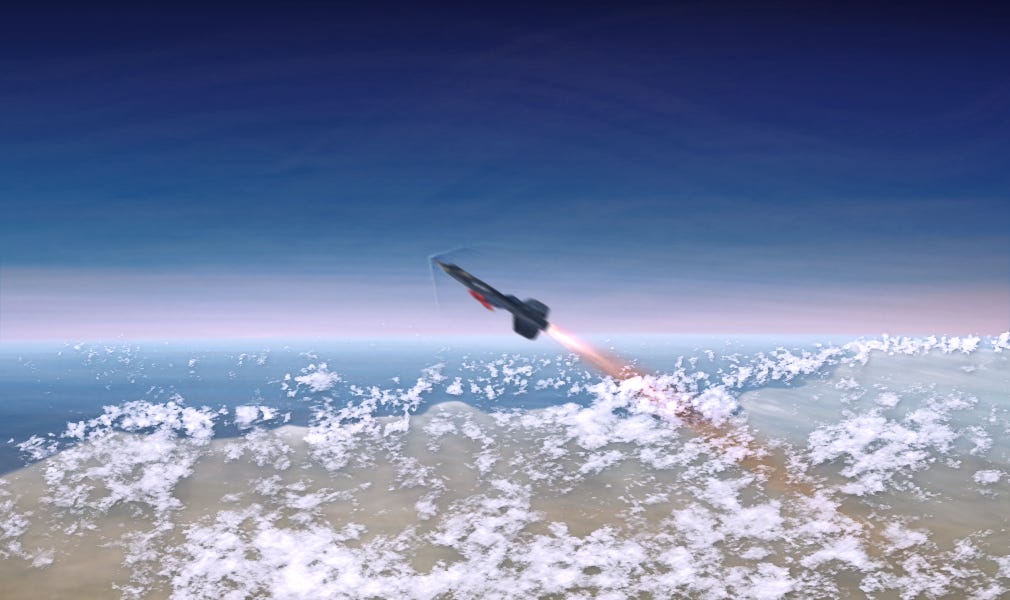
The tension during the rocket burn was intense, consuming Walker’s mind in a haze of panic and concentration. The plane rocketed up, trails flaring behind it as it climbed higher and higher into the atmosphere. Tests had been done with dummy NOTSNICs previously, but they had failed to properly distribute the mass, only using a mass simulator in a plain cylindrical shape. The actual rocket behaved differently and disrupted the airflow, not much, but more than the pilots had been trained for. Walker desperately tried to turn the plane to a less aggressive pitch, but it was a very difficult task. Eventually, after the engine had burnt out, he managed to return to a stable orientation.
CAPCOM “You alright now? The guys down here would like to breathe again.”
Walker “Tell them to enjoy the air. I sure can’t from up here.”
CAPCOM “Will do. We’ve also got some good news, that little incident has actually been a great help! You’re looking at a peak height of 50 kilometres.”
Walker “Fi- Fifty kilometres?”
CAPCOM “Have fun in the mesosphere, Joe. While you’re up there do you mind launching the rocket?”
Walker “Y- right, yeah, yeah.”
Hands shaking ever so slightly, Walker initiates the separation, hearing a clunk he quickly fires the thrusters to move away, the X-15 equivalent of the bomb toss. Too high up to use its aero surfaces efficiently, it must use its thrusters.
CAPCOM “Walker we’ve uh- we have a negative on separation, but we saw the signal sent?”
Walker “Oh? Want me to try agai- OH- OH SHIT”
The entire craft shakes violently, the NOTSNIC had failed to separate, but ignited its engines nonetheless, breaking away from the connectors, rushing forwards and tearing a chunk off the front of the X-15. Ground control and Walker struggled to think of what to do - he could try and use the abort system, but it was uncertified for this height, though the other option was a near certain death upon impact.
CAPCOM “Walker, we are recommending that you abort at apogee, you should be going just under the speed certification, for the height, it's only 10 km above, it’ll probably be ok.”
Walker “Alright then, aborting from the plane.”
Walker gets into position before closing the capsule, activating the microphone and beginning the ejection sequence. The capsule pressurises using a small tank of highly compressed air, and the plane tries to keep itself stable and induce as much drag as possible to slow itself down even more. Walker then pushes the activation grips back up and squeezes them, firing the initiators, separating the capsule and firing the small motor. The X-15 silently shoots forth in the tenuous atmosphere, releasing the drogue parachute. The parachute manages to deploy, slowing down the capsule fast enough to slam Walker’s head into the window, passing out. He woke up 12,000ft from the ground, the CAPCOM sounding more and more desperate calling for a response, until finally getting it. Walker releases the manual main parachute, slowly descending to the Pacific, not far off the Californian coast. The capsule splashes down in the ocean, its flotation booms keeping it mostly upright. Half an hour passes before a rescue ship makes it out to his position, where he can finally exit the capsule and breathe that magnificent earthly air.
October 10, 1960 - Cape Canaveral, Florida
Ever ahead of the curve, NASA was preparing to launch humanity’s first intentional interplanetary probe. The launch crew vacated the launch site as the control team sat in the mission control centre. Everything for the next few minutes was to be dominated by the necessity of this rocket launching successfully. The countdown hit zero, the LR-79-7 rocket engines of the Thor-Agena began to fire, the entire rocket slowly lifting off the ground, disappearing into a cloud of smoke only to emerge seconds later with a threatening boom. The sound quickly fades as the rocket fades out of view, the faint glow of the engines shrinking into a miniscule pinprick of light in the sky. Mariner 1 reached Earth orbit, and she was now ready to burn to Mars. A short waiting period of half an orbit elapsed before the burn was signalled to commence, a small tracking station picking up the telemetry and relaying it onwards to Houston. Mariner’s incessant hum continued to tone, until it was sharply interrupted by static. Telemetry was not regained afterwards, Mariner had failed to complete the trans-mars injection, the mission had failed.
October 14, 1960 - Kazakh SSR
This gave the Soviet Union a chance to take the lead yet again, launching from Baikonur on a normal autumn day, promptly tumbling and breaking apart. The first Mars program mission had failed before it even got a chance to spread its wings. But luckily for the program, the USSR always launches in twos.
October 16, 1960
The following days were spent confirming the structure of the new Molniya booster, every precaution was taken to make sure this mission would perform perfectly. All that was left as the clock struck zero, was for luck to be on their side. The Molniya ascended from the pad, minor shaking quickly corrected, boosters emptying and falling away. Stage after stage burnt out and broke away as the small, fragile spacecraft continued to rise away from the surface beneath. Finally, Mars 1 separated from the launcher, spreading her solar panels wide across the night sky. Ground stations heard the signal fade as she flew farther from the planet, and drifted towards the goal of Mars.
December 26, 1960, 8:30pm - NOTS, China Lake, California
The door creaks open, the bitter cold air flooding in as the internal light poured out onto the ground outside.
Mason “Hey, Nic, what are you still doing here? You’re missing North to Alaska!”
Nicolaides “Seen it already, I’d rather work on this. Why are you here?”
Mason “I noticed you hadn’t shown up, so I decided to check in here, and I saw the lights on.”
Nicolaides “Well thanks for coming to look, you really should go back and watch the movie though!”
Mason “Nonsense, I just got here! Besides, I’m curious why you’re scribbling on all these newspapers.”
Nicolaides “Couldn’t figure out where the rest of the paper went, so I’m using The Rocketeer.”
Mason “Really? It’s- It’s just in the drawer over there, the one that says paper...”
Nicolaides “Ah. Right.”
Nicolaides stood up from his desk, walking over to the drawers and grabbing multiple large sheets of paper, placing them under the strange contraption previously hidden behind him. He begins to draw a series of lines, two bold ones near the top and bottom, and one vertical in the middle. He then draws more lines, eventually there is a series of 15 horizontal lines from top to bottom, numbers from 0 to 150 between them.
Mason “We’ve got graph paper too”
Nicolaides “Well then you should’ve pointed me to that.”
Mason “What are you even doing?”
Nicolaides “Testing. We got this whole automatic computing system set up to test the piloting of the Soft Landing Vehicle.”
He presses a button and grabs onto a lever, as he pushes it forwards, a mobile plotting pen begins to move forwards, leaving behind a red trail as the paper slides along to the left. He lets go of the lever for a moment, causing the pen to start drifting down faster and faster.4
Nicolaides “The computer figures out how fast the rocket should go, with its mass and the thrust of the variable engine, and also with gravity. It's the best way to train people to control the vehicle without actually getting people to control it. It’s pretty fun, too. Going to bring in a few more people to train them, the whole thing should be ready for the first flight in April. After that, we can probably keep it around for fun. Want to give it a go, NOTStronaut?”
A similar failure occurred with a Russian Proton rocket launch, resulting in it attempting to flip directly after launch, crashing seconds later.
This, of course, prior to the country’s renaming to Türkiye.
This was the real route of this historic flight route - potentially taking it into Soviet Airspace with enough error and mistakes, as shown.
This was a real machine that was built, serving as crucial training for NOTS’ SLV vehicle.